
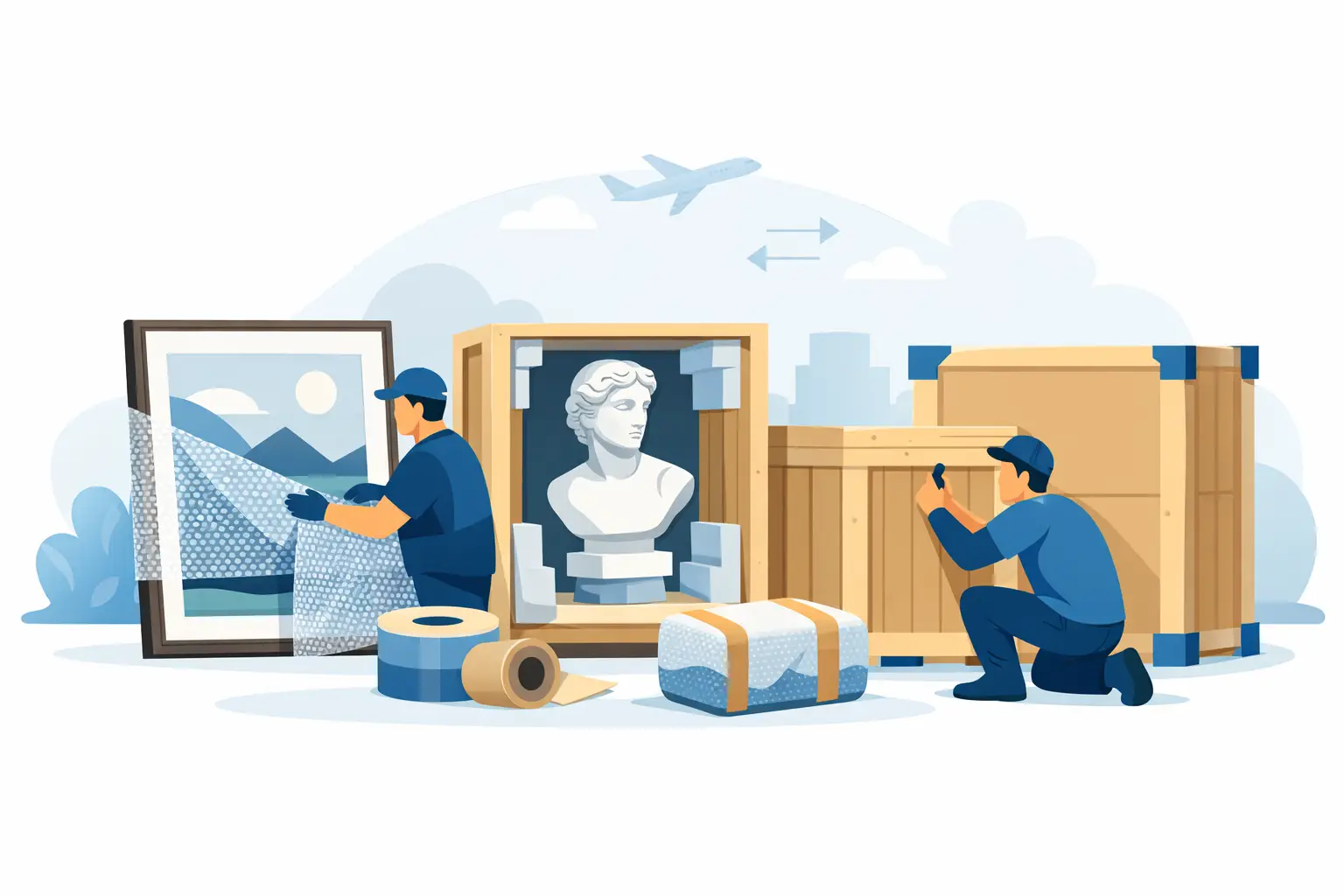
A painting can leave a residence in perfect condition and arrive with corner compression, surface abrasion, or frame stress from a trip that looked routine on paper. That is usually the moment clients ask when do artworks need custom crating. The short answer is earlier than most people expect – especially when the work is valuable, fragile, oversized, or moving through more than one handling point.
Custom crating is not simply a premium add-on. It is a risk-control measure designed around the actual vulnerabilities of a specific artwork. In fine art logistics, the decision is less about distance alone and more about exposure: who will handle the piece, how many transfers are involved, what materials are present, and what could happen if the artwork shifts, flexes, or absorbs impact in transit.
When do artworks need custom crating instead of standard packing?
If an artwork has meaningful financial, cultural, or personal value, the packaging decision should be made with the object’s condition and structure in mind, not with generic moving materials. Standard packing may be sufficient for low-risk situations, such as a small, durable framed print moving locally under direct supervision. But once the stakes rise, a crate becomes the safer and more professional solution.
Custom crating is often appropriate when the artwork is one of a kind, has a delicate surface, includes glass, projects away from the wall, or cannot tolerate pressure on the frame. It is also the right choice when transport involves common carriers, air freight, storage transitions, jobsite activity, or multiple stops. Every additional touchpoint increases the chance of impact, vibration, environmental fluctuation, or improper stacking.
For collectors, galleries, designers, and institutions, custom crating also protects against a more subtle problem: avoidable uncertainty. A properly engineered crate creates predictability. It controls movement, isolates sensitive areas, and gives handlers clear structure for safe lifting and placement.
The main factors that determine whether a crate is necessary
Value is usually the first consideration, but it should not be the only one. A moderate-value work with unstable media may need more protection than a higher-value piece with a very durable construction. The decision is best made by assessing the object itself.
Fragility of materials and surface
Unframed canvases, gilded frames, works on paper, mixed-media pieces, sculptures with protruding elements, and anything with friable or textured surfaces deserve close review. Bubble wrap and soft packing materials are not inherently protective if they touch vulnerable finishes. In some cases, direct contact is exactly what causes damage.
A custom crate allows for internal support systems, archival wrapping layers, cushioning zones, and clearance around sensitive surfaces. That is especially important for works with impasto, resin, leafing, lacquer, pastel, charcoal, or unstable assembly points.
Size and weight
Larger works are harder to control during lifting, turning, loading, and unloading. Even if the artwork is not especially fragile, scale introduces risk. Oversized framed works can rack under their own weight. Heavy sculptures can shift if the base is not secured correctly. A crate can be built to distribute weight properly and reduce stress on weak points.
This is one of the most common it-depends situations. A small painting may travel safely in a travel frame or soft pack under white glove handling. A very large painting with the same materials may require a crate because the dimensions alone create handling complexity.
Distance and route complexity
A short local move is not automatically low risk. If the artwork is traveling through elevators, tight corridors, active construction zones, or a loading dock with limited staging space, custom crating may still be the prudent choice. On the other hand, a direct, carefully managed transfer between two secure locations may not require a full crate for every piece.
Long-distance transport almost always raises the threshold for protection. The more miles involved, the more likely the work will experience vibration, repeated loading, environmental changes, or periods outside your direct oversight.
Number of handling points
A direct pickup and delivery by trained fine art handlers is very different from a shipment that passes through warehouses, transfer hubs, receiving teams, or temporary storage. When more people handle the piece, standard packing leaves too much to chance.
Crates provide both protection and discipline. They create a clearly defined exterior shell, reduce improvisation during transport, and make the piece easier to move without touching the artwork itself.
Types of artworks that commonly need custom crating
Paintings are the category most clients think about first, but they are far from the only works that benefit from crating. Framed paintings with glazing, antique frames, and large canvases often require it because impact tends to affect corners, frame joints, and glazing before damage is visible from the front.
Works on paper are another frequent candidate. Even when framed, they are highly vulnerable to flex, pressure, and moisture changes. Proper crating helps stabilize the package and prevent loading stress that can damage both the frame package and the art inside it.
Sculpture often requires the most tailored engineering. Weight distribution, center of gravity, attachment points, and surface protection all matter. A sculpture crate may need internal bracing, mounts, foam carving, or blocking built to the exact profile of the piece.
Mixed-media and contemporary works can be the least forgiving because they do not always conform to traditional packing assumptions. A piece may include soft materials, polished surfaces, electronics, suspended elements, or intentionally unstable forms. In those cases, custom crating is less about best practice in the abstract and more about responding to the actual behavior of the object.
When soft packing is enough – and when it is not
Not every artwork needs a full crate. For local installation projects, short-distance relocation, or controlled transport between trusted parties, professional soft packing may be entirely appropriate. This can include corner protection, glass protection, wrap systems, and secure vehicle placement handled by experienced art technicians.
The mistake is assuming that soft packing and custom crating are interchangeable. They are not. Soft packing protects against minor contact and routine movement. Crating protects against impact, compression, stacking pressure, and uncontrolled handling environments.
That distinction matters for clients managing time and budget. There is no value in over-packing a durable, low-risk piece. There is also no savings in under-protecting a work that would be difficult or impossible to restore.
How professionals decide when artworks need custom crating
A proper recommendation starts with assessment, not assumptions. That means reviewing dimensions, media, structural condition, frame construction, glazing type, travel method, origin and destination conditions, and the number of transitions in between. The artwork’s current condition also matters. Existing cracks, loose joins, prior restorations, or surface instability can push a piece into crate territory even if the route seems simple.
Professionals also think beyond the truck. Will the piece wait on site before installation? Is there exposure to weather during loading? Will it be stored temporarily? Are there access constraints that require tilting or rotating the work? These operational details often determine the right packing level.
At ARTSOLVE, that decision process is part of white glove planning rather than an afterthought. The crate is built around the object, the route, and the actual handling sequence, which is how museum-level care translates into practical protection.
The cost question clients often ask
Custom crating costs more than standard packing, and that is a reasonable concern. But the real comparison is not crate cost versus no crate. It is crate cost versus the financial and reputational consequences of damage, delayed installation, conservation treatment, insurance claims, or loss of client confidence.
For designers, galleries, and collection managers, presentation quality matters as much as protection. A work that arrives with even minor condition issues can derail a schedule, complicate sign-off, and create unnecessary friction between parties. Custom crating reduces those variables.
There are also levels within crating. Not every crate must be built for the same conditions. Domestic transport, short-term storage, and high-touch local delivery may call for different specifications than long-haul or freight-based movement. The point is precision, not excess.
A practical rule of thumb
If replacing the artwork would be impossible, if repairing it would be expensive or visually compromising, or if the route includes any uncontrolled handling stage, custom crating should be strongly considered. The same applies to works with fragile surfaces, unusual dimensions, or structural sensitivity.
If the move is direct, local, tightly supervised, and the piece is physically durable, professional soft packing may be enough. That is why the best answer is rarely automatic. It comes from evaluating the object, the route, and the consequences of getting it wrong.
The safest art transport plans are usually the ones that look slightly more careful than necessary on the front end. That extra discipline is what keeps a straightforward move from becoming a conservation issue later.
Need Professional Art Packing & Crating?
Protect valuable artwork with professional packing and custom crating for safe handling, transportation and storage in Miami and throughout South Florida.


3 Comments