When an art fair booth looks calm, polished, and effortless, that finish usually reflects weeks of disciplined installation planning for art fairs behind the scenes. The public sees the final presentation. What they do not see is the freight timing, wall measurements, crate sequencing, condition reporting, installer access, and last-minute problem solving that determine whether a booth opens on time and in proper form.
At fair level, presentation and logistics are inseparable. A strong curatorial concept can be weakened by poor spacing, rushed hanging, lighting conflicts, delayed arrivals, or avoidable handling risk. For galleries, artists, and collectors lending work, installation is not just a technical phase. It is the moment where value, visibility, and vulnerability all meet.
Why installation planning for art fairs starts earlier than most teams expect
Art fairs compress risk into a very short window. Delivery schedules are tight, loading docks are crowded, labor access can be limited, and any delay tends to ripple across the entire booth. A work that arrives ten minutes later than expected may affect crate storage, installer sequencing, lift access, and final lighting adjustment.
That is why experienced teams begin with a full installation plan well before transit. The planning process should account for artwork dimensions, weight, media, framing details, hardware requirements, packing method, and site conditions at the fair. It should also define who is responsible for each handoff. If that chain is unclear, even a well-packed shipment can stall once it reaches the venue.
Early planning also protects against a common mistake: treating all works as if they install the same way. A framed photograph, a multi-panel painting, a sculpture on pedestal, and a suspended work may share a booth, but they require different tools, labor, timing, and risk controls. The more valuable or fragile the work, the less room there is for improvisation on site.
The real variables behind a successful fair install
A fair installation plan needs to go beyond a checklist. It should reflect how the work will physically move from crate to wall or pedestal, and how the booth will function once visitors arrive.
The first variable is sequencing. Not every artwork should be unpacked the moment it arrives. In many booths, larger or harder-to-access works should be installed first, while smaller framed works can wait until walls are finished, pedestals are placed, and floor traffic drops. Sequencing affects safety as much as speed.
The second variable is documentation. Condition notes should be current before departure, verified on arrival, and reviewed again after installation. This matters for insurance, lender confidence, and clean project management. It also reduces confusion when multiple parties are involved, especially if a work has come from storage, a private residence, or another exhibition.
The third variable is hardware compatibility. Fair walls are not all the same. Some support standard hanging methods; others have restrictions tied to weight, surface protection, or approved fasteners. Assuming a preferred installation method will be available is risky. Confirming wall type and load limitations in advance is a basic but often missed part of installation planning for art fairs.
Lighting is another factor that is often handled too late. Placement decisions should consider glare, shadow, reflection on glazing, and visitor sightlines. A work may fit physically in one location but present poorly under the fair’s actual light conditions. Good planning leaves room for adjustment without forcing a complete rehang.
Packing and crating decisions shape the installation
Installation quality begins long before the truck arrives. Packing and crating should support the order of installation, not just the act of transport. When crates are packed without regard to booth sequence, handlers may need to open multiple containers at once, increasing congestion and exposure.
A better approach is to label and load based on install priority. If the largest centerpiece must go up first, it should be accessible first. If pedestal works need final placement after wall installation, they should not block the unpacking zone. These details sound minor until a team is working under a fixed fair deadline with limited floor space.
Crate design also matters. Reusable museum-style crates offer stronger protection and more controlled access for high-value works, but they require space to open safely and may need a more deliberate dock plan. Soft packing can be appropriate for certain movements, especially short-distance local transport, but it depends entirely on the media, fragility, and handling environment. There is no single correct method. The right answer depends on the work and the route it is taking.
Booth layout is part logistics, part presentation
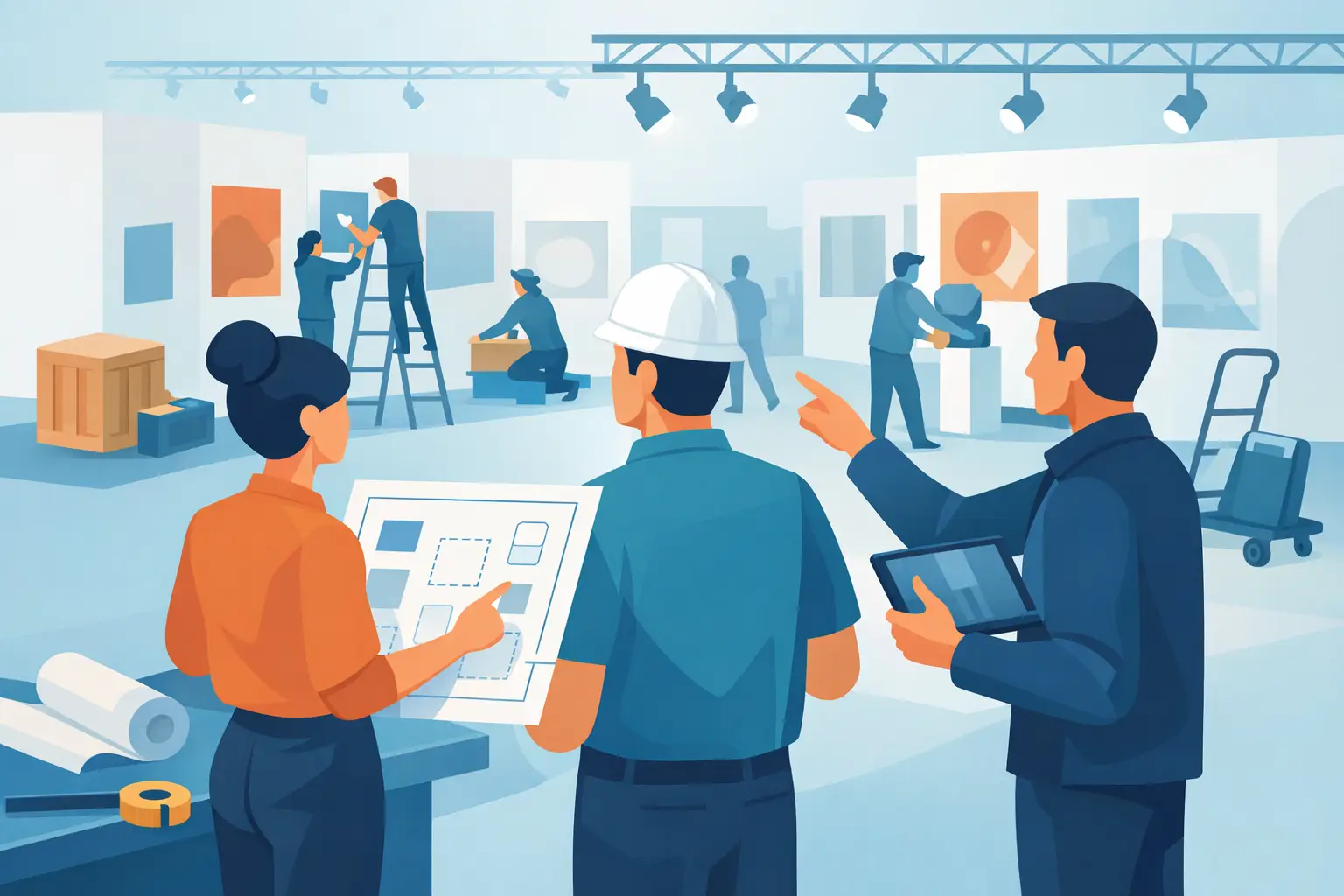
A fair booth should not be planned only from a sales or design perspective. It also needs to function as an installation environment. Tight spacing may look efficient on paper but create unnecessary risk during the build. Overscaled works may technically fit a wall while leaving too little room for handling clearance. Pedestal placement can interfere with ladder access or create bottlenecks during installation.
The strongest booth plans account for both visual rhythm and physical workflow. Sightlines matter, but so do turning radius, safe lifting paths, and where packing debris will be staged while the booth is still active. In premium fair environments, cleanliness and composure matter. A disorganized install area sends the wrong signal and increases the chance of avoidable damage.
For galleries showing mixed media, the layout should also reflect installation duration. A salon-style arrangement may require more measuring and alignment than a sparse presentation. That does not make it wrong. It simply means labor and time should be budgeted accordingly.
Working with the venue, not against it
Every fair has its own operational framework. Access hours, dock appointments, COI requirements, labor rules, freight deadlines, and storage limitations all affect the installation plan. Problems often begin when teams treat these as paperwork issues instead of installation realities.
For example, a venue may allow deliveries only within a narrow check-in period. Missing that slot can delay unloading enough to disrupt the entire booth schedule. The same applies to lift reservations, special handling approvals, or after-hours access for complex installs. If the work requires unusual rigging, oversized entry clearance, or delicate assembly, those needs should be identified early and communicated clearly.
This is where an experienced fine art logistics partner becomes especially valuable. Professional oversight does more than move artwork from point A to point B. It aligns transport timing, handling method, venue compliance, and final presentation so that the install progresses in a controlled way.
What clients should ask before a fair installation begins
Whether you are preparing a gallery booth, placing a lent work, or managing a multi-piece presentation, a few questions reveal how solid the plan really is. Has each artwork been assessed for handling requirements? Is there a confirmed sequence for delivery, unpacking, installation, and empty crate management? Are condition reports current and assigned to a responsible party? Has the team confirmed wall type, hardware, and any venue restrictions?
It is also worth asking what happens if something changes. Fair environments rarely go exactly as planned. A crate may arrive later than expected, a wall dimension may differ slightly from drawings, or lighting may require repositioning. A well-managed team builds in decision paths for these moments instead of improvising under pressure.
That flexibility is part of professional care. Precision does not mean rigidity. It means understanding where there is room to adapt and where there is not.
Installation planning for art fairs is really risk management
The most overlooked truth about fair installation is that it is not only about getting the booth ready. It is about reducing exposure at every stage. Damage risk increases when too many works are open at once, when tools are not prepared, when measurements are made on the fly, or when responsibility is split across too many people without a clear lead.
Strong planning reduces those pressure points. It protects the artwork, keeps the schedule intact, and supports the level of presentation serious collectors and galleries expect. In a market like Miami, where fair visibility, collector trust, and presentation standards are especially high, that level of preparation is not excessive. It is appropriate.
ARTSOLVE approaches this work with the same principle that governs all high-care art handling: every object deserves a plan that reflects its actual needs, not a generic process. At fair level, that distinction matters quickly and visibly.
The best time to solve installation problems is before the truck is loaded, before the dock is booked, and before the booth walls go up. That is usually where a fair opens well.
Need Help Installing Your Artwork?
From private residences to commercial and hospitality spaces, ART SOLVE provides professional art installation throughout Miami and South Florida, with the precision, care and experience valuable artwork demands.


