A strong gallery exhibition setup is judged long before opening night. It shows in the spacing between works, the sightlines from the entry, the stability of each mount, and the quiet confidence that nothing has been left to chance. For galleries, collectors, artists, and design-driven venues, setup is not a final task. It is the moment where logistics, presentation, and risk management become visible.
The difference between a polished exhibition and a stressful one usually comes down to planning depth. Beautiful work can lose impact when lighting is inconsistent, labels are misaligned, or installers are forced to solve preventable issues on site. High-value art deserves a setup process that treats presentation and protection as equally important.
What gallery exhibition setup actually includes
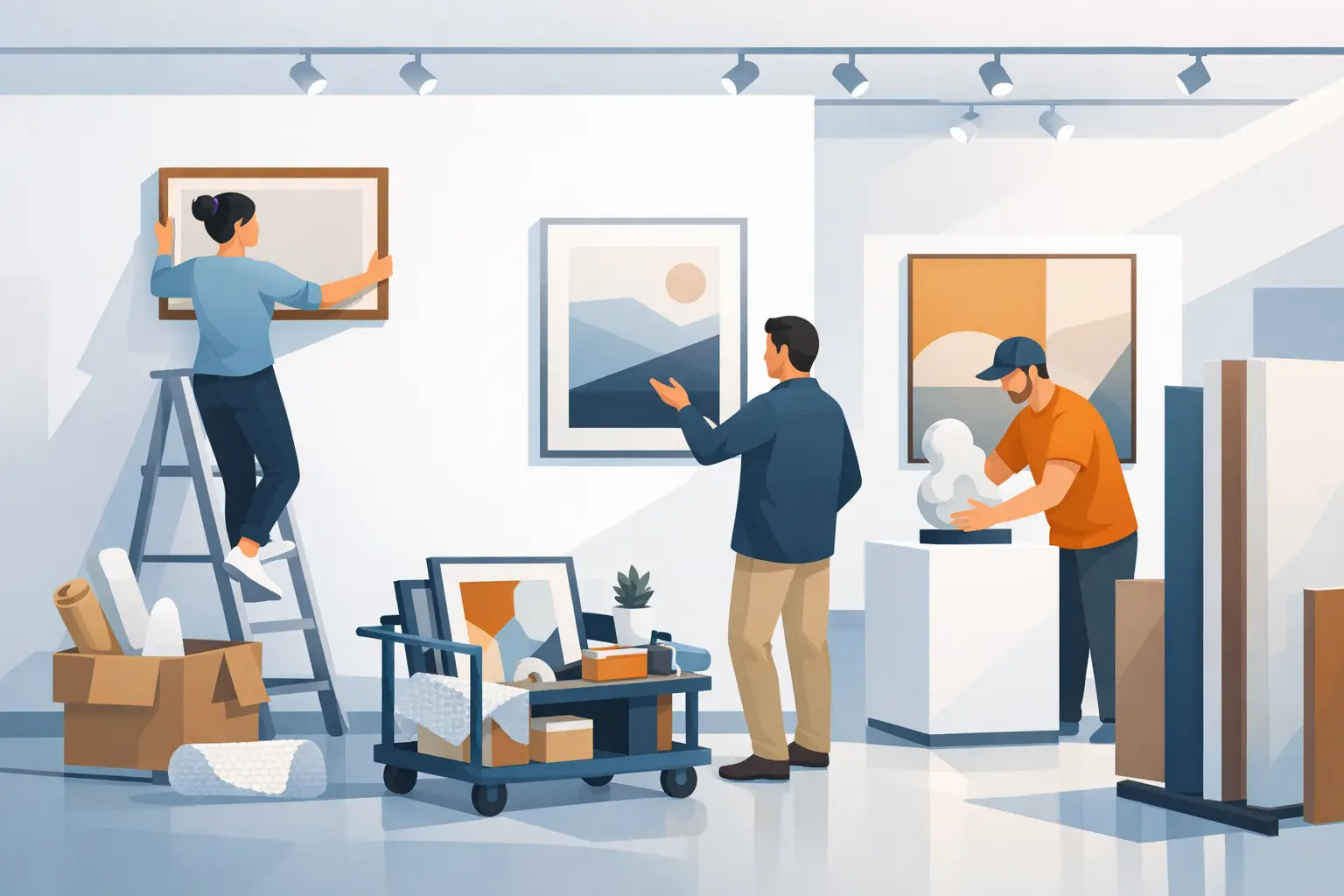
Gallery exhibition setup is often reduced to hanging artwork on walls. In practice, it is a coordinated sequence of decisions that starts well before installation day. The work begins with understanding the exhibition itself: the number of pieces, media types, dimensions, weight, fragility, framing details, display furniture, wall conditions, access restrictions, and deadline.
From there, setup becomes an operational plan. Each piece needs a handling approach, placement strategy, and installation method that suits both the artwork and the space. A framed photograph, a suspended sculpture, and a large-format painting do not move through a gallery in the same way, and they should not be installed with the same assumptions.
This is why experienced teams spend time on condition review, sequencing, hardware selection, wall layout, equipment planning, and room flow. The visual result may feel effortless. The process behind it is anything but casual.
The planning stage determines the outcome
Most exhibition problems are created before the first crate is opened. If measurements are incomplete, if the walls have not been assessed, or if the installation order is improvised, even a skilled crew will lose time managing avoidable complications.
A reliable setup starts with exact information. That includes verified dimensions of every artwork, current condition records, framing and glazing notes, and any special display requirements from the artist, curator, or lender. It also includes site-specific details such as elevator size, loading access, floor protection needs, wall substrates, and ceiling height.
The layout should be settled as early as possible, but not rigidly. There is always a balance between curatorial intent and on-site adjustment. A spacing plan that works on paper may need refinement once scale, natural light, and viewer movement are experienced in the room. The key is to make those refinements from a controlled plan, not from guesswork.
Why sequencing matters
Installation order affects both efficiency and risk. Heavier works may need to go in before adjacent pieces limit access. Fragile works should not be unpacked too early if the room is still active with ladders, tools, and crate movement. Pedestals, vitrines, and freestanding elements often need placement before wall-mounted works are finalized.
The best setups follow a sequence that protects the art while keeping the team productive. That sounds simple, but it requires discipline. Rushed crews tend to create congestion, unnecessary handling, and preventable contact with finished surfaces.
Protection standards should never be treated as optional
A refined presentation means very little if the artwork is exposed to unnecessary risk during setup. Handling protocols matter just as much inside the gallery as they do during transport. Gloves, padded surfaces, clean staging zones, proper lifting technique, and secure temporary placement are basic requirements, not premium extras.
This becomes especially important in multi-piece exhibitions where unpacking and placement happen in stages. Once several works are moving at once, the room can become vulnerable to confusion. Clear staging areas, artwork identification, and role assignments keep pieces from being leaned against the wrong surface, opened in the wrong order, or placed where traffic is highest.
Condition checks should also be active throughout the process. If a work arrives with an issue, that must be documented before installation proceeds. If a mount or frame shows stress during handling, the team needs to stop and reassess. In fine art logistics, confidence comes from documentation and method, not assumption.
Gallery exhibition setup and the viewer experience
The technical side of setup protects the work. The presentation side shapes how the exhibition is received. These are not separate concerns. A poorly aligned salon wall or inconsistent centerline can make even exceptional work feel unsettled.
Sightlines matter first. Visitors should understand the exhibition from the moment they enter, whether the intention is symmetry, tension, narrative progression, or quiet pacing. Spacing between works affects how each piece breathes. Too tight, and the eye feels crowded. Too loose, and the room can lose coherence.
Height is another area where judgment matters. Standard centerlines are useful, but they are not universal rules. A contemporary gallery presentation may call for one rhythm, while a hospitality setting or private viewing room may require another. Large works, diptychs, dense groupings, and sculptural elements all change the visual logic.
Lighting can elevate or flatten the show
Lighting is often adjusted last, yet it has an outsized effect on the exhibition. Glare on glazing, uneven wash, hot spots, and shadow interference can diminish the work and frustrate viewers. Proper aiming and intensity control should be treated as part of the installation scope.
It also depends on the medium. Textured surfaces, metallic leaf, glass, and highly reflective finishes all respond differently under gallery lighting. The right setup team accounts for those variables early rather than trying to correct them after the room is complete.
Installation methods are never one-size-fits-all
One of the most common mistakes in gallery exhibition setup is using generic hanging methods for specialized works. Artwork should be installed according to weight, structure, wall condition, security needs, and the expectations of the venue or lender.
Some pieces require security hardware. Others need cleats, hidden supports, or reinforced anchoring points. Sculptures may need seismic restraint or discreet stabilization. Oversized works may demand multiple installers and specialized equipment simply to achieve safe, level placement.
There is also a difference between what can be hung and what should be hung in a particular way. Museum-level care means choosing methods that preserve the artwork, respect its construction, and support future deinstallation without avoidable wear.
When timelines are tight, precision matters more
Exhibition schedules are rarely generous. Openings move forward even when shipments arrive late, wall repairs take longer than expected, or last-minute additions change the layout. Under pressure, the temptation is to speed up every task equally. That usually creates more risk, not less.
A better approach is selective compression. Some tasks can move faster with proper staffing and preparation. Others should not be rushed at all. Final placement, hardware engagement, label alignment, and condition-sensitive handling need full attention, even on a compressed schedule.
This is where professional coordination adds value. A team that understands art handling can move decisively without becoming careless. That matters in any market, but especially in active art environments like Miami, where gallery schedules, fairs, private installations, and collector deadlines often overlap.
What clients should expect from a professional setup team
Whether the project is a gallery show, a private viewing, or an exhibition inside a commercial space, clients should expect more than labor. They should expect a clear process. That includes pre-installation planning, artwork-by-artwork handling awareness, appropriate tools and protection materials, and installation decisions that reflect both aesthetics and conservation-minded care.
Communication is equally important. Clients should know who is responsible for placement approval, who is documenting condition, and how changes are being managed on site. The strongest teams are calm, discreet, and exacting. They solve problems without making the room feel chaotic.
For high-value collections and exhibition projects, white glove handling is not only about courtesy. It is about control. Every step should reduce uncertainty, protect the artwork, and support the standard of presentation the exhibition deserves.
ARTSOLVE approaches setup with that standard in mind: technical planning, museum-level handling, and installation precision shaped around the needs of each piece and each space.
A successful exhibition should feel composed, not improvised. When the setup is done properly, the art holds the room, the details disappear into the background, and everyone involved can focus on the work itself.
Need Help Installing Your Artwork?
From private residences to commercial and hospitality spaces, ART SOLVE provides professional art installation throughout Miami and South Florida, with the precision, care and experience valuable artwork demands.


