
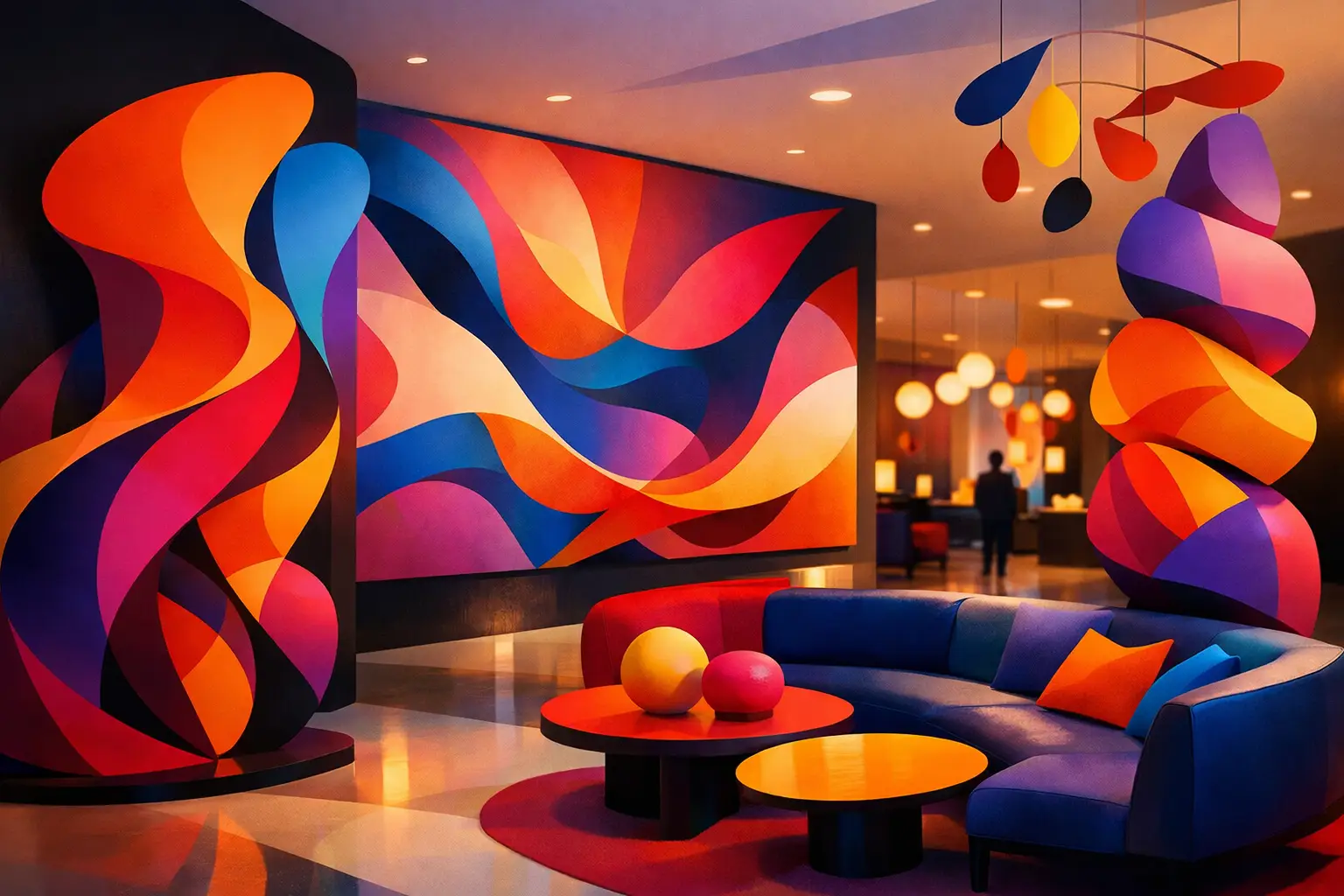
A hotel lobby can absorb thousands of glances in a single day. Guests may only spend a few seconds taking in a wall, a sculpture niche, or a framed piece near reception, but those few seconds shape their impression of the property. That is why art installation for hotels is not a finishing touch to handle at the end. It is a technical and presentation-driven process that affects brand perception, guest experience, and asset protection all at once.
In hospitality settings, artwork has to do more than look good in a rendering. It has to perform in a live environment with constant traffic, active housekeeping, rolling luggage, changing light, and ongoing maintenance schedules. The installation has to be visually precise, structurally sound, and coordinated around operations. When the work is high value, oversized, fragile, or one of a kind, the margin for error gets very small.
What makes art installation for hotels different
Hotels are not quiet private residences, and they are not controlled gallery spaces either. They sit somewhere in between. A piece installed in a guest corridor may face vibration from service carts, frequent touchpoints from guests, and repeated exposure to cleaning products. A work in a restaurant or bar may need to coexist with moisture, heat, and extended operating hours. Art in suites or meeting spaces has to feel refined without creating risks for staff or visitors.
That mix of aesthetics and operational pressure changes how installation should be approached. Placement decisions have to account for circulation patterns, wall construction, sight lines, security, and access for future maintenance. A beautiful piece that is mounted at the wrong height, on the wrong hardware, or without proper site assessment can quickly become a liability.
This is also why hotel projects often require more coordination than clients expect. Designers, ownership groups, procurement teams, contractors, and property staff may all have a stake in the outcome. If no one is managing the technical side of the art plan, details get missed. Frames arrive before walls are ready. Crated sculptures show up with no safe staging area. Install dates land in the middle of active guest turnover. Those are avoidable problems, but only with proper planning.
The real work starts before anything goes on the wall
Strong installation begins with evaluation. Every artwork should be reviewed for dimensions, weight, media, framing condition, hanging method, and sensitivity to handling or environment. That sounds basic, but it is the difference between a controlled installation and a rushed one.
A framed print package may call for one solution, while a multi-panel mixed media work may require another. Large mirrors and heavy framed works often need reinforcement awareness and exact anchoring strategy. Sculptural pieces may need pedestal leveling, discreet fastening, or traffic protection. Site conditions matter just as much as the art itself. Drywall, concrete, stone cladding, millwork, and specialty finishes each present different constraints.
For hotels, scheduling is part of the technical plan. Installation may need to happen during pre-opening, after a renovation phase, or in an occupied property with strict service windows. Elevator access, loading dock rules, and public area closures can shape the entire sequence. If those conditions are not built into the process early, installers end up solving preventable problems on site, and that is usually when damage occurs.
Why precision matters as much as style
Hospitality design is highly visual. Guests notice alignment, spacing, and scale even if they cannot explain what feels off. A salon-style grouping that drifts by half an inch from piece to piece can make an otherwise polished interior look unfinished. A sculpture set slightly out of axis in a lobby can interrupt the balance of the room. These details are not cosmetic trivia. They affect the perceived quality of the property.
Precision also protects the artwork. Improvised hardware, rushed measuring, or insufficient wall support may hold for a day and fail over time. In a hotel environment, failure does not only mean a damaged artwork. It can also mean guest injury, operational disruption, and reputational harm.
This is where white glove handling and museum level care are not marketing phrases. They reflect a methodology. Condition should be reviewed before movement. Protective materials should match the work. Handling should account for fragility points, finish sensitivity, and frame stress. Final placement should be deliberate, documented, and checked from both a structural and visual standpoint.
Common pressure points in hotel art projects
The most challenging hotel installations are not always the most complex visually. They are often the ones where timelines compress and responsibilities blur.
New hotel openings can be especially demanding. Furniture is arriving, punch list work is still active, and multiple trades are moving through finished spaces. In that setting, artwork can be exposed to dust, accidental contact, and scheduling conflicts if the install team is brought in too early or too late. Renovations create a different issue. Existing art may need temporary deinstallation, secure storage, transport between phases, and reinstallation under revised design plans.
There is also the question of standardization versus custom treatment. Some hotel groups want consistency across many rooms or floors, which can suggest a repetitive installation process. But the artwork still deserves individual assessment. Variations in framing, substrate, wall condition, or location can change the correct method. Treating every piece the same may save time on paper, but it often increases risk in practice.
How experienced teams protect both artwork and operations
A professional hotel art installation process should feel controlled from the first assessment through final placement. That means clear documentation, careful sequencing, and disciplined handling standards.
Condition reporting is one of the most overlooked safeguards. Before transport or installation, each piece should be evaluated so any pre-existing wear, surface issues, frame instability, or mounting concerns are recorded. This creates accountability and helps prevent confusion later, especially on multi-piece or multi-floor projects.
Packing and transport standards are just as important. Hotel art often moves through loading docks, service corridors, elevators, and partially active job sites. Without proper packing, even a short trip from staging to final location can create avoidable damage. Custom protection is often necessary for glazed works, delicate finishes, protruding elements, or oversized formats.
On site, the install team should work with the same discipline expected in a gallery or museum-adjacent setting. That includes controlled unpacking, clean work areas, proper tools, exact layout execution, and respect for surrounding finishes. In premium hospitality environments, protecting the walls, floors, millwork, and lighting scheme matters too.
When custom solutions are the right call
Not every hotel project calls for the same level of intervention, but many benefit from custom planning. A boutique property may commission statement works that define the guest experience and require detailed placement strategy. A luxury renovation may involve relocating existing collections while integrating new acquisitions. A large hospitality group may need phased installation across public spaces, suites, and private amenities without interrupting operations.
In those cases, the art should not be treated like generic décor. It is an asset category with presentation, conservation, and risk considerations. That is particularly true when pieces are irreplaceable, historically significant, or tied to a broader design narrative.
In Miami and South Florida, this can take on another layer. Climate, coastal conditions, and active hospitality schedules create practical demands that reward experienced planning. Teams that understand both fine art handling and the realities of high-end commercial environments are better positioned to deliver a clean result without unnecessary exposure.
Choosing a partner for hotel installation work
The right installation partner should be able to speak to more than hanging technique. They should understand logistics, condition awareness, staging, coordination, and the standards expected around high-value artwork. They should also be comfortable working alongside designers, project managers, and hotel operations teams without losing control of the details.
That matters because hotel projects rarely stay static. Site readiness changes. Deliveries shift. Access windows tighten. A trusted art services partner keeps the work protected while adapting to the project as it actually unfolds.
For hospitality groups, designers, and property teams, the best outcome is not simply that the art is installed. It is that the artwork arrives safely, is presented exactly as intended, and enters service without creating future problems. ARTSOLVE approaches that standard with the level of precision, discretion, and care fine art requires.
Artwork has a quiet job in a hotel. It sets tone, builds memory, and gives the property a point of view. Installing it well means treating that quiet job with serious discipline from the very beginning.
Need Help Installing Your Artwork?
From private residences to commercial and hospitality spaces, ART SOLVE provides professional art installation throughout Miami and South Florida, with the precision, care and experience valuable artwork demands.


