
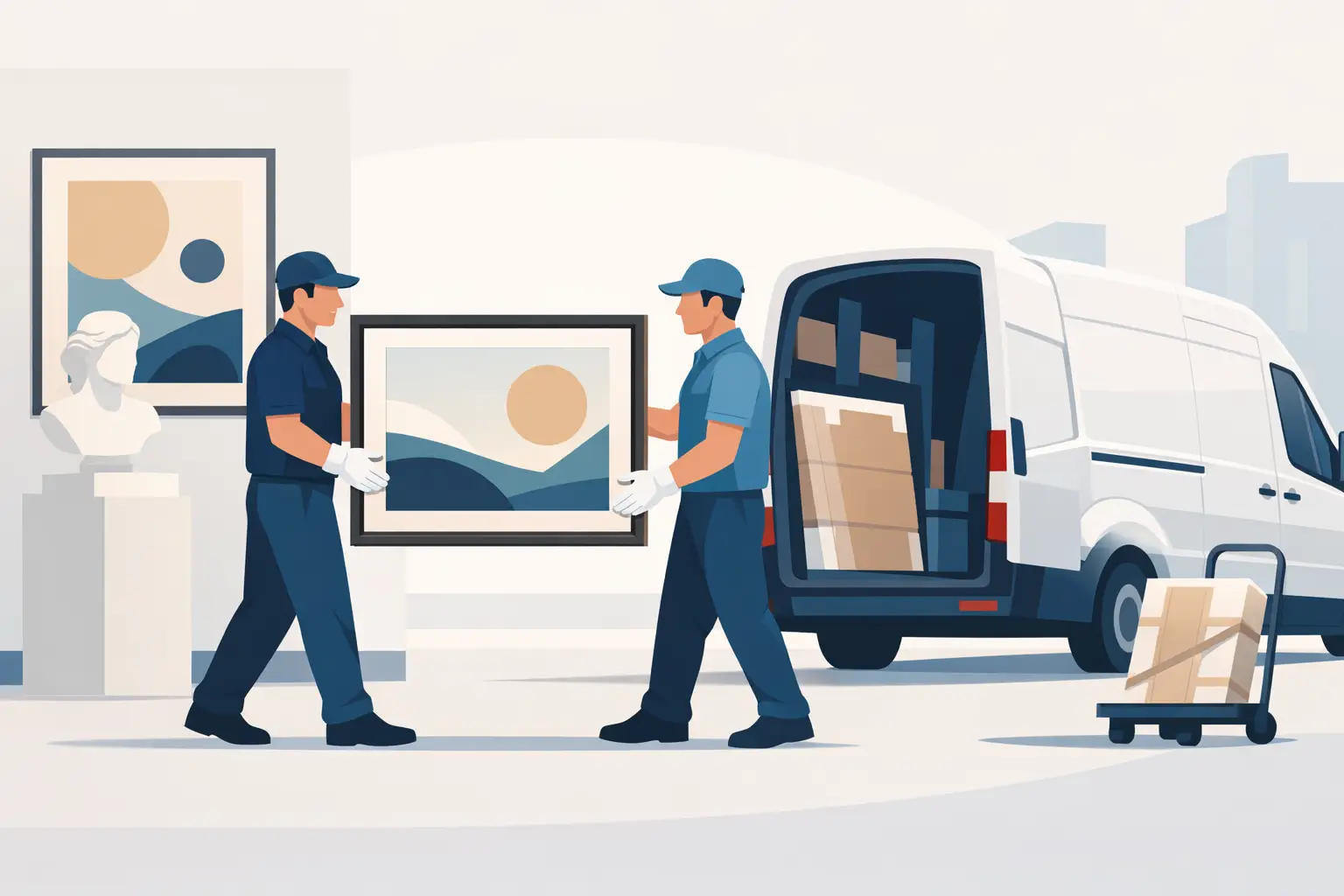
A painting arrives with a crushed corner, a sculpture shifts inside a crate, or a framed work is hung without checking wall conditions first. Most art damage does not happen because someone intended to be careless. It happens when valuable work is treated like ordinary freight. That is exactly why a guide to white glove art delivery matters for collectors, galleries, designers, and institutions that cannot afford preventable risk.
White glove art delivery is not simply premium shipping. It is a controlled process built around the needs of the artwork itself. That includes condition review, packing methods matched to the medium, trained handlers, route planning, environmental awareness, careful placement on arrival, and, when needed, final installation. The difference is not cosmetic. It is operational.
What white glove art delivery actually includes
The term gets used loosely, so it helps to define it clearly. In a professional fine art context, white glove delivery means the artwork is managed with specialized handling standards from pickup through placement. The team is expected to understand fragility, weight distribution, glazing, surface sensitivity, installation requirements, and documentation protocols.
That usually begins before the truck is loaded. A proper delivery plan considers the dimensions of the piece, its condition, the type of frame or mount, whether it needs soft packing or a custom crate, and what will happen at the destination. If the work is going into a private residence, the path from entry to final room matters. If it is going into a gallery or commercial setting, timing, access, and presentation standards matter just as much.
White glove service also means accountability. The work should be tracked, handled by trained art professionals rather than general movers, and delivered with a clear chain of custody. For high-value pieces, that level of control is often the real service being purchased.
A guide to white glove art delivery starts with assessment
No two artworks travel the same way. A framed photograph under acrylic presents different risks than a large canvas with impasto, a mirrored work, or a mixed-media piece with protruding elements. The first stage of any serious delivery is assessment.
That assessment should answer a few practical questions. What is the artwork made of? Where are its vulnerable points? Does it need climate consideration? Can it travel vertically, or must it remain flat? Is the existing frame structurally sound enough for transport? Does the destination require stairs, elevator coordination, or a scheduled receiving window?
This is where many problems begin when service is oversimplified. A delivery provider that treats all works as boxed objects may miss issues that are obvious to trained art handlers. Surface abrasions, frame stress, loose joinery, unstable backing, and hanging hardware concerns can all turn into avoidable damage if they are not identified early.
For collectors and design professionals, this stage is also where expectations should be aligned. If an oversized piece requires extra handlers, onsite assembly, or special rigging conditions, those details should be established before the move day, not improvised during it.
Packing is where protection is either built or lost
The quality of delivery is often decided long before the vehicle starts moving. Packing is not just about wrapping an item until it feels secure. It is about creating the right level of protection for the work, the route, and the handling conditions.
Soft packing may be appropriate for certain local transfers, especially when the piece is stable, framed, and moving directly from one controlled interior to another. That does not mean casual packing. It still requires proper materials, corner protection, surface-safe barriers, and a method that prevents pressure on vulnerable areas.
Custom crating becomes necessary when the artwork is particularly fragile, unusually valuable, structurally complex, or exposed to longer transit and more handling points. A well-built crate does more than enclose the work. It limits movement, absorbs shock, and supports safe loading and unloading.
There is always a cost trade-off here, and that is where experience matters. Not every piece needs the highest level of packing, but under-protecting artwork to save time or money often becomes expensive in the worst possible way. The right standard is the one that matches the actual risk profile of the piece.
Transport standards matter more than most clients realize
A polished vehicle alone does not make a white glove service. The transport phase depends on how the artwork is loaded, secured, monitored, and unloaded. Fine art should never be packed into a truck the same way standard household goods are packed.
Placement inside the vehicle matters because vibration, shifting, and pressure points can affect both framed and unframed works. Temperature and humidity exposure can also matter, depending on the medium. Works on paper, panel paintings, and pieces with delicate finishes may respond poorly to unstable conditions, even during relatively short trips.
Route planning is another overlooked part of proper delivery. Tight timing, avoidable delays, and multiple unnecessary stops can all increase risk. For high-care deliveries, the objective is not simply to get from one address to another. It is to reduce variables.
In Miami and South Florida, that can include practical local factors such as building access windows, high-rise service elevator policies, and weather-related loading concerns. A provider with local art logistics experience understands that delivery quality is often determined by preparation outside the truck just as much as inside it.
Documentation is part of the service, not an extra
Clients often focus on the physical movement of the artwork, but documentation is equally important. A professional white glove process should include condition reporting when appropriate, inventory verification, and clear records of what was received, transported, and delivered.
For galleries, dealers, and collectors managing multiple works, this protects more than the object. It protects communication, responsibility, and insurance clarity. If a piece has a pre-existing issue, that should be noted before transport. If packaging is removed onsite and the work is placed or installed, the handoff should be clear and documented.
This is especially valuable in multi-party projects where the artwork may be moving between artist studios, storage, private homes, design firms, and exhibition spaces. Without documentation, even a well-executed delivery can create confusion later.
Final placement and installation complete the job
Delivery is not always finished when the truck is unloaded. In many art projects, the most sensitive phase happens at the destination. Tight hallways, finished interiors, delicate wall surfaces, and precise placement expectations all require technical control.
A true white glove service accounts for the final environment. That might mean placing large works safely before a design reveal, unpacking and positioning sculpture without contact damage, or installing framed pieces with exact spacing and secure mounting. Presentation matters, but so does long-term stability.
This is also where art handling differs sharply from standard moving labor. Installers must understand balance, hardware selection, substrate conditions, and sightline considerations. A work that arrives safely but is poorly installed is still a failed outcome.
How to evaluate a white glove art delivery provider
If you are hiring for a single collector delivery or an entire project rollout, the right questions are practical. Ask how the artwork will be assessed before transport. Ask who is doing the handling. Ask what packing standard is recommended and why. Ask how condition and custody are documented. Ask what happens at delivery if access conditions differ from the original plan.
It is also reasonable to ask how the provider handles exceptions. If weather changes, if the receiving location is not ready, or if a piece requires more protection than initially expected, experienced teams should have a process rather than an improvised answer.
The best providers do not overpromise with generic luxury language. They explain methodology. They account for variables. They make the process feel calm because the work behind the scenes is precise.
For clients who manage valuable artwork regularly, that reliability is what builds trust over time. ARTSOLVE operates in that high-care category, where technical handling, discretion, and project coordination are expected at every stage rather than added as afterthoughts.
When white glove delivery is worth it
Not every object requires museum-level treatment, but many artworks do. If the piece is high value, irreplaceable, fragile, oversized, newly finished, or headed into a demanding installation environment, white glove delivery is usually the prudent choice. The same applies when the client needs dependable coordination across multiple stakeholders.
The real value is not extravagance. It is risk control, presentation quality, and professional execution. For collectors, galleries, designers, and institutions, those are not optional details. They are the difference between moving art and caring for it properly.
A well-run delivery should feel quiet, orderly, and exact. That is usually the clearest sign that the difficult work was handled where it belongs, behind the scenes, with respect for the artwork from the first touch to the final placement.
Need Art Courier & Delivery in Miami?
ARTSOLVE provides art transportation and courier delivery across Miami and South Florida. Keep collections and exhibitions together with continuous chain of custody, specialized white-glove handling and installation upon delivery when included in your project.


4 Comments