
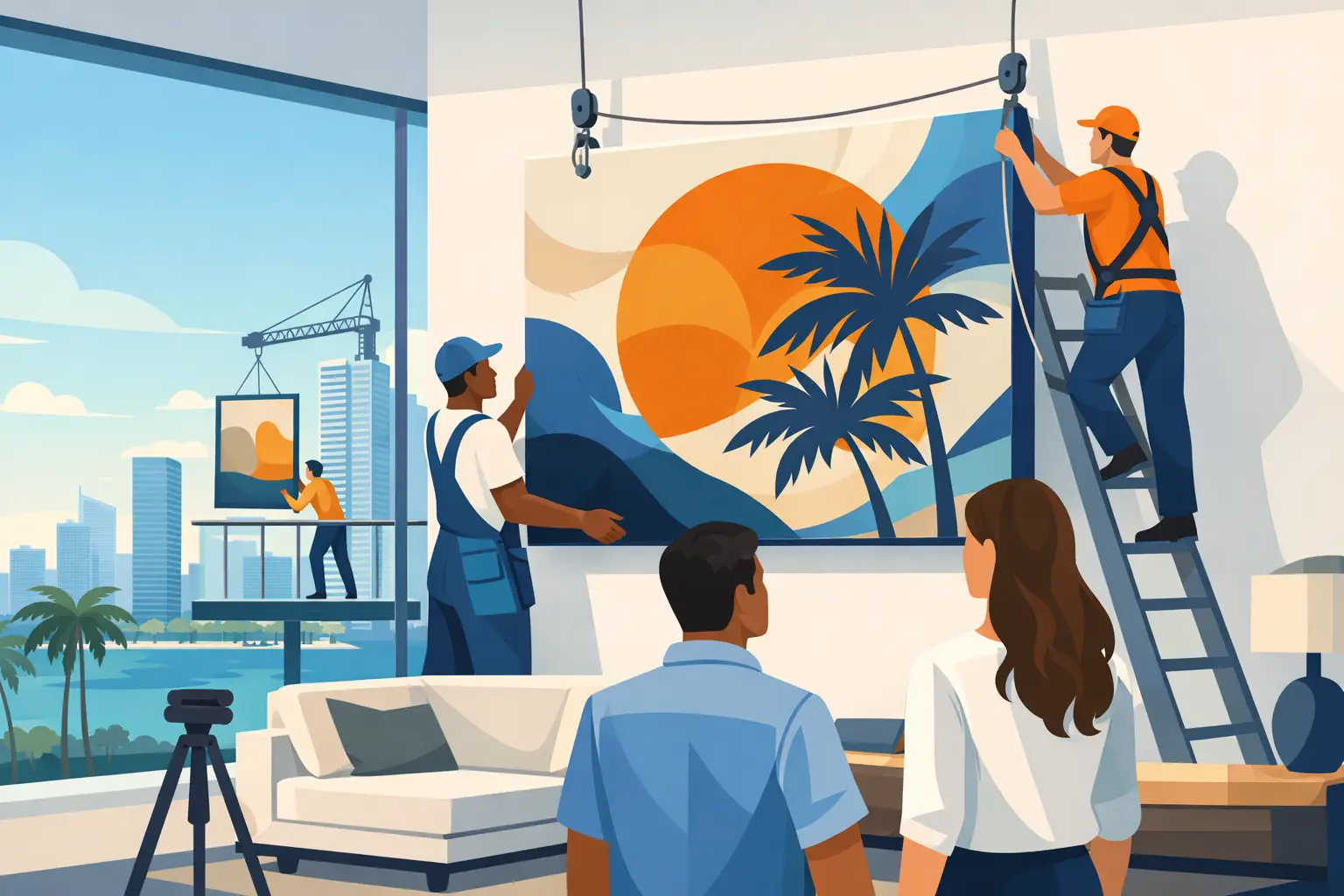
A monumental canvas may look effortless above a console or across a double-height living room, but its final position is only one part of the project. Installing large artwork in Miami condos & high-rise buildings requires careful coordination between the collector, designer, building staff, and art handlers long before the piece reaches the residence. A work that is irreplaceable, oversized, glazed, or structurally complex should never be treated like standard décor.
For collectors and design teams, the objective is simple: the artwork arrives in documented condition, moves safely through the building, and is installed with exact visual and structural precision. Achieving that outcome depends on an informed plan, not a last-minute appointment.
Why High-Rise Art Installation Requires Its Own Plan
A residence on the 30th floor presents constraints that do not exist at a street-level home. The route from truck to wall may include a loading dock with restricted hours, service-elevator reservations, narrow turns, protective floor coverings, and building rules governing contractor access. In Miami, many luxury condominiums have detailed procedures for deliveries, insurance documentation, elevator use, and work-area protection.
The scale of the artwork changes every decision. A large framed painting may fit through a lobby door but not around a service corridor turn. A sculpture can be stable in a crate yet require special equipment to position safely once inside. A work intended for a wall may require a structural review before anyone selects hardware.
The best time to identify these issues is during a site assessment. Measurements should include more than the artwork and the destination wall. Professional planning accounts for the crate, elevator cab dimensions, door clearances, ceiling heights, hallway turns, loading conditions, and the exact path from vehicle to installation location. If the standard route is not viable, the team can determine whether alternate access, additional equipment, or a revised installation sequence is needed before moving day.
Pre-Installation Assessment Protects the Work and the Residence
Before handling begins, the artwork should be evaluated as an object with its own requirements. Its dimensions, weight, medium, frame construction, hanging system, glazing, existing condition, and sensitivity to movement all affect the handling plan. A heavy work with a delicate period frame calls for a different approach than a contemporary aluminum-mounted photograph, even if both share similar dimensions.
Condition documentation is equally valuable. Clear records establish the artwork’s state before transport and installation, creating accountability at every handoff. For collections moving between residences, galleries, storage, or a designer’s staging location, this documentation helps maintain a reliable chain of care.
The installation environment deserves the same level of attention. Art handlers assess the wall material, available structural support, finish quality, nearby electrical elements, sprinkler heads, furniture placement, and lighting. In a finished luxury interior, avoiding unnecessary wall disturbance matters as much as achieving a secure mount.
The Wall Determines the Hardware
A wall that appears substantial may conceal metal studs, furring channels, mechanical systems, or limited backing. Concrete construction is common in high-rise buildings, but interior partitions vary significantly from one unit to another. Hardware must be selected for the actual substrate, the artwork’s full weight, and the forces created when the piece is lifted, leveled, or adjusted.
This is not a place for generalized picture hooks or assumptions based on the frame alone. A professional installation may require a French cleat, security hardware, custom brackets, multiple anchor points, or a purpose-built support solution. The appropriate method depends on the object and wall, not on a one-size-fits-all standard.
For especially large or valuable works, the team should also consider how the installation will remain stable over time. Proper load distribution, secure engagement with the frame or mounting structure, and final leveling protect both presentation and long-term safety.
Coordinating Building Access Without Rushing the Artwork
Condominium management is a necessary partner in a successful installation. Building requirements can include certificates of insurance, vendor registration, scheduled service-elevator windows, loading dock instructions, and limits on when drilling or other work may occur. These details are administrative, but overlooking them can create avoidable delays at the exact moment the artwork is in transit.
The installation plan should establish who is responsible for submitting documents, reserving access, confirming elevator capacity, and communicating with the concierge or property manager. It should also clarify whether the delivery route needs protective padding or whether common-area protection is provided by the building.
Timing matters. A rushed elevator window creates pressure that no fine art project needs. Allowing sufficient time for unloading, careful movement, acclimatization when appropriate, placement, installation, and final inspection gives the team room to work methodically. This is particularly relevant for works arriving from climate-controlled storage, long-distance transport, or a venue with substantially different temperature and humidity conditions.
Installing Large Artwork in Miami Condos With Precision
Once the work is inside the residence, the installation becomes a visual exercise as well as a technical one. The correct centerline is not always a fixed number from the floor. Sightlines change in a double-height living room, above low furniture, along a stair, or opposite expansive windows. Designers may work from architectural drawings, furniture plans, or a carefully established visual axis; collectors may simply know that a piece must feel balanced within the room.
A precise team confirms placement before committing to the wall. This can include measuring from fixed architectural references, marking the proposed position, checking level, and reviewing the work from key viewing distances. For diptychs, triptychs, salon groupings, or works installed in dialogue with sculpture, spacing and alignment are part of the artwork’s presentation.
Lighting should be considered before final placement as well. Miami’s intense daylight can shift dramatically through the day, particularly in residences with broad glass exposures. Glare on glazing, reflections from water or neighboring towers, and strong direct sun can affect how a work reads. Placement may need to balance the desired composition with conservation-minded exposure considerations.
White Glove Handling During the Final Move
The final few feet are often the highest-risk portion of the project. Frames, corners, glazing, and finished walls are vulnerable while a large work is being maneuvered into position. White glove handling means using the appropriate personnel, protective materials, and controlled movement for the specific object rather than treating installation as a general labor task.
For a substantial piece, that may mean a coordinated lift by trained handlers, clean gloves where appropriate, protective corner guards, and a staged approach to unpacking. Packaging should remain in place until the artwork is near its destination whenever practical, reducing unnecessary exposure during transit through the building and residence.
ARTSOLVE approaches this stage with museum-level care, coordinating art handling, placement, and installation as one continuous process. That continuity is valuable because the people installing the work understand how it was packed, transported, assessed, and intended to be presented.
Common Shortcuts That Create Unnecessary Risk
The most frequent problems begin with good intentions and incomplete information. A building’s service elevator is assumed to accommodate the work. A wall is assumed to be concrete. The artwork is uncrated too early. A delivery is scheduled before management approval is complete. Each shortcut can turn a straightforward installation into an expensive delay or, worse, a damage event.
Another common mistake is treating a large artwork as a simple weight calculation. Weight matters, but so do dimensions, center of gravity, frame integrity, mounting points, and the consequences of an accidental impact. A wide but relatively light work can be difficult to turn through a narrow hall. A compact bronze can place far greater load on a mounting system than its size suggests.
Professional art logistics accounts for these variables in advance. The plan should also include a realistic contingency for weather, traffic, elevator delays, and restricted access. Miami’s conditions can change quickly, and valuable art should not be left exposed while a team improvises.
The Final Review Is Part of the Installation
Installation is not complete when the hardware disappears behind the frame. The final review verifies that the work is level, secure, properly spaced, clean, and viewed as intended. The team should inspect the frame and surface after installation, remove protective materials carefully, and leave the space orderly.
For collectors, it is also useful to retain basic installation records, including the location, hardware approach, and condition notes. This information supports future rehanging, collection inventories, renovations, and moves to another property.
Large-scale artwork deserves a process equal to its value and presence. With informed planning, controlled handling, and exact installation, the piece can command the room for the right reason: because it has been placed with the care its maker and owner intended.
Need Help Installing Your Artwork?
From private residences to commercial and hospitality spaces, ART SOLVE provides professional art installation throughout Miami and South Florida, with the precision, care and experience valuable artwork demands.


