
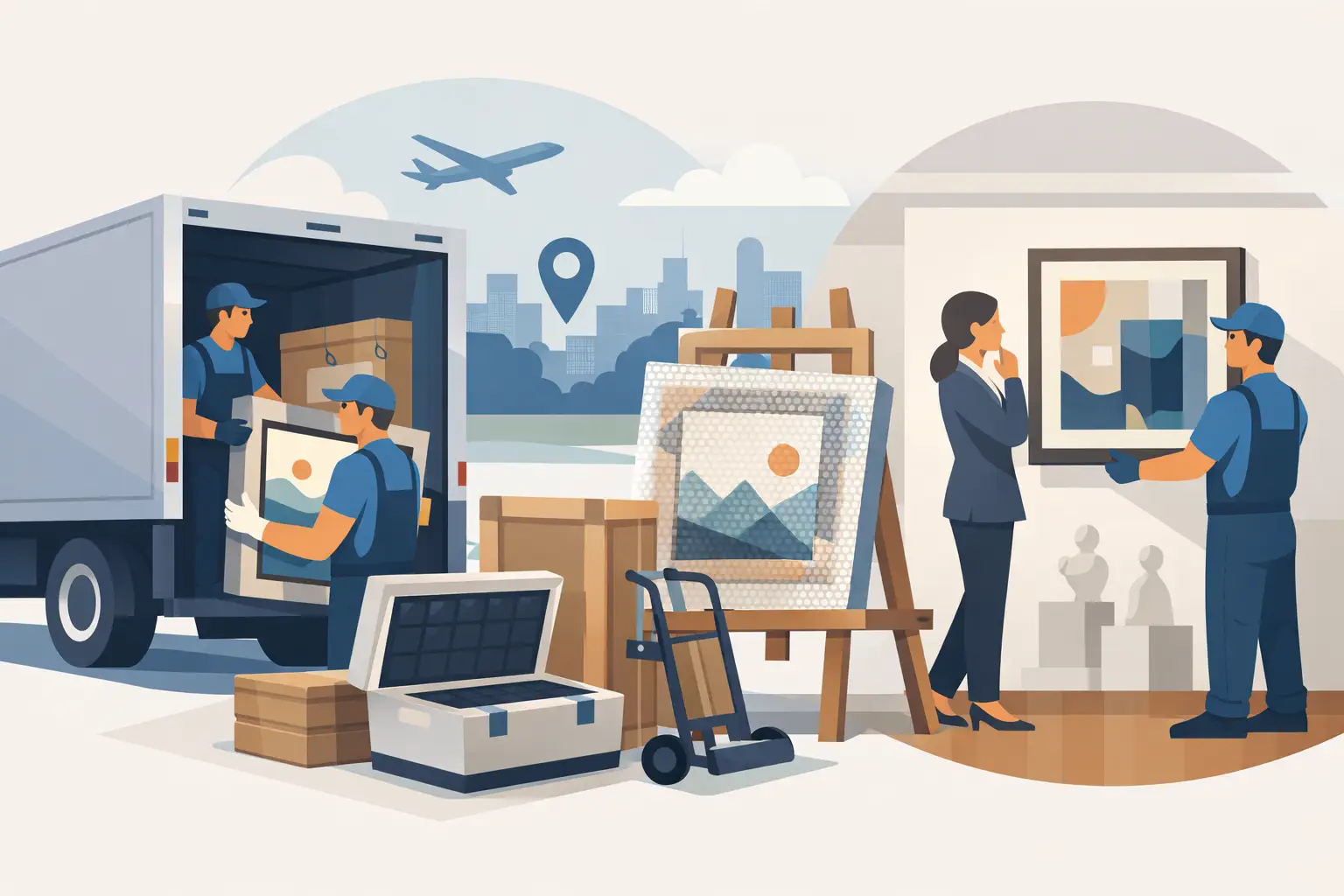
A painting can leave a gallery wall in perfect condition and arrive with a crushed corner, a pressure mark, or subtle surface abrasion that was never part of the plan. That is why gallery artwork transport is not a standard moving task. It is a controlled handling process built around risk reduction, documentation, and respect for the object at every stage.
For galleries, dealers, and collectors, the stakes are rarely limited to replacement cost. The work may be one of a kind, on consignment, committed to a sale, or needed for a time-sensitive installation. A missed delivery window or a preventable handling issue can affect not only the artwork, but also client relationships, exhibition schedules, and institutional credibility. Transport has to support the presentation and protection of the work, not simply get it from one address to another.
What gallery artwork transport actually involves
Professional gallery artwork transport begins well before a vehicle is loaded. The first step is understanding the object itself – its dimensions, medium, condition, framing, glazing, mounting method, and any structural vulnerabilities. A framed photograph with acrylic glazing presents different risks than an unframed canvas, a sculpture with projecting elements, or a large mixed-media work with unstable surfaces.
That assessment shapes every decision that follows. The packing materials, whether a soft pack or custom crate is appropriate, how many handlers are required, vehicle placement, vibration control, route timing, and final delivery conditions all depend on the specifics of the piece. In a gallery setting, that planning often extends to sequence as well. If multiple works are moving between storage, exhibition, and client delivery, transport has to be coordinated around access, installation order, and condition reporting.
This is where experienced art logistics teams distinguish themselves from general movers. A moving company may know how to relocate household goods efficiently. Fine art handling requires a different standard – slower where needed, more precise at every touchpoint, and guided by conservation-minded thinking rather than volume or speed.
Why standard transport methods create avoidable risk
The most common transport problems are not dramatic accidents. They are smaller failures in judgment and preparation. A work wrapped in the wrong material can develop surface impressions. A frame that is carried correctly but loaded poorly can shift under transit vibration. A sculpture that appears stable may need internal support during movement that a non-specialist would never anticipate.
Climate and environment also matter more than many clients expect. Heat, humidity, and abrupt temperature changes can affect paint layers, paper, adhesives, wood components, and certain contemporary materials. In places like Miami and South Florida, that exposure risk is not theoretical. Loading times, staging conditions, and vehicle management all need to account for the local climate, especially when works are moving between private residences, galleries, storage facilities, fairs, or hospitality spaces.
There is also the issue of documentation. If condition is not recorded before pickup, small changes may be impossible to verify later. That creates uncertainty for galleries, sellers, insurers, and buyers. Strong transport protocol includes condition checks, handling notes, and clear chain-of-custody practices so everyone involved has confidence in the process.
Packing decisions should follow the artwork, not a template
One of the clearest signs of professional care is that the packing method is matched to the piece. Not every work needs a crate, and not every work is protected by standard wrapping. Good transport planning avoids both under-protection and unnecessary handling.
Soft packing can be appropriate for short-distance, low-risk movement when the artwork is stable, well-framed, and moving directly with careful supervision. Even then, materials matter. Protective layers must be archival or non-abrasive where needed, corners and edges should be stabilized, and the wrap should support the work without putting pressure on vulnerable surfaces.
Custom crating becomes essential when the artwork is especially valuable, fragile, oversized, or traveling farther distances with more handling transitions. A properly built crate does more than surround the work with wood. It controls movement, distributes weight correctly, protects protruding elements, and supports safe loading and unloading. The internal design is often more important than the exterior shell.
For galleries managing rotating inventory or exhibition schedules, this tailored approach saves more than damage costs. It reduces delays, rehandling, and last-minute decisions that tend to introduce risk.
The transport vehicle is part of the protection system
Clients often focus on packing, but the vehicle matters just as much. Fine art should travel in a clean, secure, professionally equipped vehicle where the load is stable and organized around the needs of the work. That means padded interiors where appropriate, proper tie-down methods, controlled stacking rules, and enough space to avoid pressure loading.
Route planning also deserves more attention than it usually gets. The shortest route is not always the safest one. Traffic patterns, road conditions, timing, building access windows, and weather can all influence transport decisions. For high-value or sensitive work, reducing unnecessary stops and handling transitions is often worth more than shaving a few minutes off the drive.
Security is another practical concern. Discretion in labeling, careful scheduling, and controlled handoff procedures help limit exposure. For collectors and galleries, privacy is often part of the service standard, especially when works are moving from residences, private collections, or confidential sales.
Installation and delivery are part of the same job
Transport should not be treated as separate from the final handoff. Many artwork issues happen at the point of delivery, when a piece is unpacked too quickly, leaned against the wrong surface, or installed without reviewing wall conditions and mounting requirements.
A stronger process connects transport to placement. That includes verifying the receiving environment, bringing the correct installation hardware, and understanding the intended presentation before the truck arrives. A large framed work, for example, may be transported perfectly and still face risk if the delivery team is not prepared for stair access, elevator limits, substrate type, or exact placement direction.
For galleries, designers, and commercial clients, this continuity is valuable because it reduces fragmentation. The same team that assessed the work, packed it, and moved it understands how to complete the final stage without improvisation. That consistency tends to produce cleaner installs, better timing, and fewer surprises.
What sophisticated clients should ask before booking gallery artwork transport
The right questions are usually operational. How will the artwork be assessed before transport? What packing method is recommended, and why? Will condition be documented at pickup and delivery? Who is performing the handling? What vehicle standards are in place? Is the delivery direct, or are there multiple stops? What happens if building access changes at the last minute?
These questions reveal whether a provider is working from a fine art protocol or adapting a general logistics model to art. The answer should never feel generic. High-care artwork transport is specific by nature, because the object, route, schedule, and destination all influence the correct plan.
This is also where service experience matters. Galleries and collectors are not only paying for labor. They are paying for judgment – the ability to identify risks early, coordinate accurately, and keep valuable work protected without creating friction for the client.
Why process matters as much as protection
Excellent gallery artwork transport is visible in the details: measured handling, clean packing, documented condition, precise scheduling, and calm execution under pressure. The process should feel controlled from first assessment through final placement.
That level of care is especially valuable in active art markets where timelines shift, installations move quickly, and reputation matters. In Miami, where exhibitions, private collections, and design projects often intersect, transport teams need both technical discipline and art-world fluency. ARTSOLVE operates in that space with white glove handling designed for clients who expect museum-level care and dependable execution.
The best transport work is often the least noticeable. Nothing slips, nothing rubs, nothing arrives with a question mark attached to it. The artwork simply reaches its next setting in the condition it left, ready to be shown, placed, or installed exactly as intended.
When the piece matters, transport should feel less like moving and more like stewardship.
Need Art Transportation in Miami?
ARTSOLVE provides art transportation and courier delivery across Miami and South Florida. We move individual artworks, whole collections and exhibitions with specialized white-glove handling, continuous chain of custody and installation upon delivery when included in the agreed scope.


