
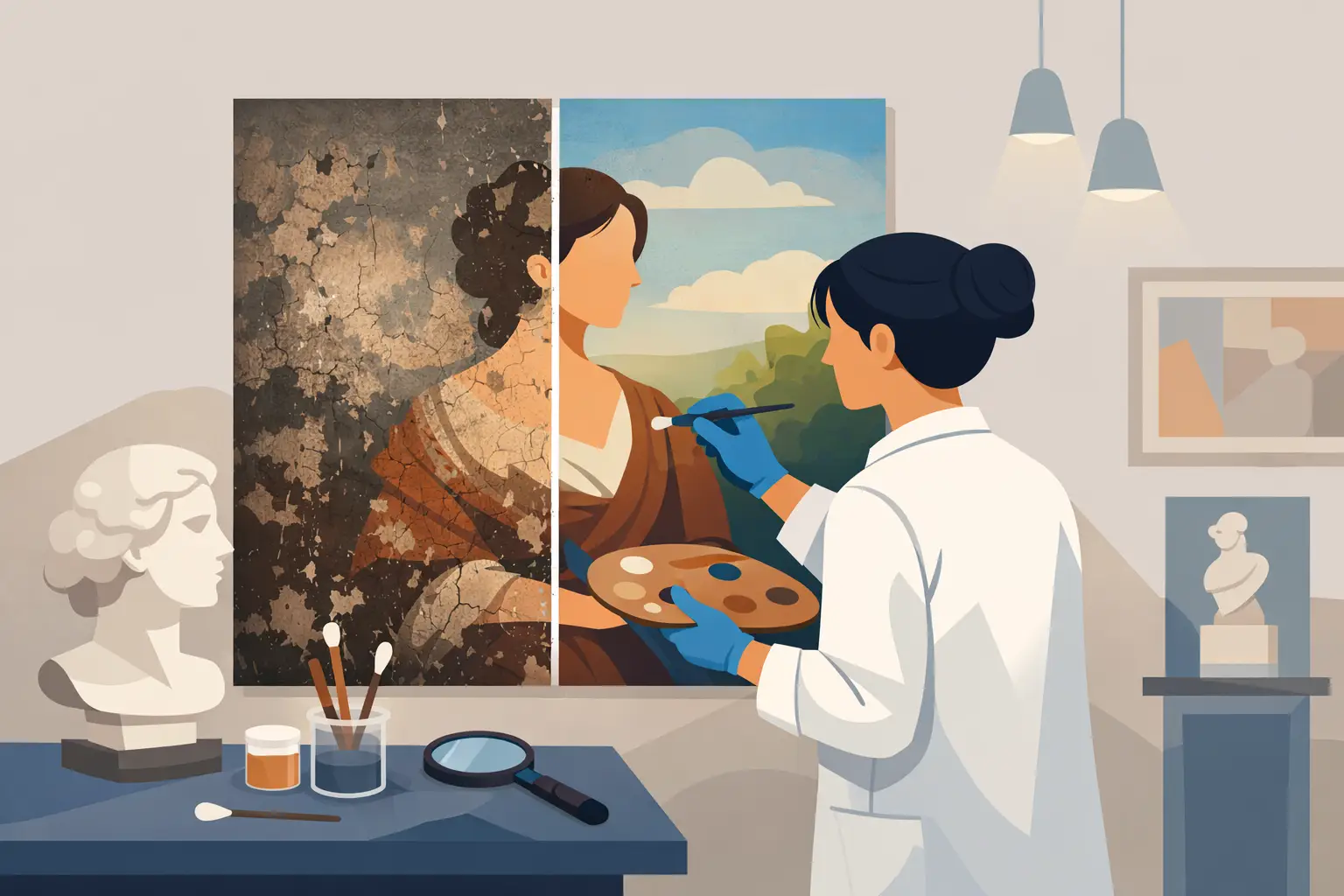
A painting with a small tear, a canvas with surface grime, a frame with active flaking – these issues rarely stay cosmetic for long. When should art be restored is not just a question of appearance. For collectors, galleries, designers, and institutions, it is a question of preservation, value, stability, and whether a manageable condition issue is about to become a far more serious one.
The short answer is this: art should be restored when its condition begins to threaten the work’s long-term stability, readability, or safe handling. That sounds straightforward, but in practice, timing depends on the material, the type of damage, the environment, and the role the artwork is expected to play. A painting headed into storage, transport, exhibition, or installation may need intervention sooner than one remaining undisturbed in a stable setting.
When should art be restored instead of simply monitored?
Not every imperfection calls for treatment. Patina, age, and minor wear can be part of a work’s history. In fact, over-restoration is one of the most common mistakes in the care of fine art. The goal is not to make every piece look new. The goal is to preserve original material and prevent loss.
A work moves from “monitor” to “restore” when deterioration is active, structural, or likely to spread. Flaking paint is a good example. What begins as a localized area of lifting can quickly become paint loss during transport or even routine handling. The same is true of a small puncture in canvas, foxing on paper that suggests broader environmental problems, or a frame failure that puts the artwork itself at risk.
This is why condition changes should be assessed early. A trained eye can distinguish between stable aging and instability that needs prompt conservation treatment. Waiting may narrow the available options and increase both complexity and cost.
The clearest signs a work may need restoration
Some signs are obvious. Others are easy to miss until they affect display quality or structural integrity.
Surface dirt alone does not always require restoration, but grime can obscure detail, alter tonal balance, and trap moisture or pollutants against a surface. Yellowed varnish is another common issue with older paintings. It can flatten contrast, distort color relationships, and make a work appear dull or brown. In those cases, treatment may be appropriate not because the piece looks old, but because non-original material is interfering with how the artwork is meant to be seen.
More urgent signs include lifting paint, active cracking, tears, punctures, water staining, mold activity, planar distortion, insect damage, and unstable backing or framing elements. Works on paper may show acid burn, embrittlement, discoloration, or cockling from humidity exposure. Sculptural works may develop loose joins, surface corrosion, or stress fractures that compromise safe movement and installation.
The key distinction is whether the issue is aesthetic, structural, or both. Aesthetic issues can often wait if the work is stable. Structural issues generally should not.
Why timing matters before transport or installation
Restoration decisions are often driven by logistics as much as by condition. A piece that can remain untouched on a private wall may become vulnerable the moment it is packed, moved, or reinstalled. Even museum-level packing cannot eliminate the risks created by loose paint, weakened canvas, brittle paper, or failing frames.
That is why condition review before transport is so important. If a work shows instability, treatment may be advisable before crating or shipment rather than after arrival. This is especially relevant for high-value works, oversized pieces, and mixed-media objects with fragile or projecting components.
In a market like Miami, where art often moves between residences, galleries, fairs, storage, and seasonal installations, climate shifts and repeated handling can accelerate existing condition problems. A seemingly minor issue can become consequential once a work enters transit. Proper planning protects both the artwork and the project timeline.
When should art be restored for value and presentation?
Collectors often ask whether restoration helps preserve value. The honest answer is: it depends on the quality, necessity, and documentation of the treatment. Appropriate conservation can protect value by stabilizing original material and improving legibility. Poorly judged restoration can do the opposite.
For works entering sale, exhibition, or prominent placement in a residence or commercial setting, presentation matters. But restoration should never be reduced to cosmetic improvement alone. Any treatment should be justified by the condition of the piece and carried out with respect for reversibility, material compatibility, and historical integrity.
This is especially true for significant works, artist-important pieces, and objects with provenance sensitivity. Heavy-handed inpainting, excessive cleaning, or alteration of original surfaces may create short-term visual improvement while damaging long-term credibility. The best restoration is often the one that is least intrusive while still achieving stability and visual coherence.
Cases where waiting may be the better choice
Sometimes the right answer is not to restore immediately. Stable craquelure, minor abrasions, age toning, and period wear may be acceptable, particularly if intervention introduces unnecessary risk. Contemporary works can be even more complex. Some artists use inherently unstable materials, unconventional surfaces, or intentionally fragile finishes. In those cases, treatment decisions should be especially cautious.
There are also moments when additional research is needed before any action is taken. If a work’s authorship, age, prior restoration history, or material composition is unclear, a hasty treatment decision can create problems. Good conservation starts with accurate assessment, not assumptions.
This is why condition documentation matters. Detailed photography and reporting help establish whether a change is recent, active, or long-standing. For private collectors and collection managers, this record is also useful before storage, loan, or transport.
The role of environment in restoration timing
A work that has been exposed to poor humidity control, direct sunlight, salt air, water intrusion, or fluctuating temperatures may need restoration sooner than one in a controlled environment. Environmental stress does not just affect appearance. It changes how materials behave over time.
Canvas can slacken or distort. Adhesives can fail. Paper can become brittle or stained. Wooden supports and frames can expand, contract, or warp. If the environment causing the damage is not corrected, restoration alone will not solve the problem. The same condition issue may simply return.
That is why treatment timing should always be considered alongside storage, display, and handling conditions. Preservation is never just about repairing damage after the fact. It is about reducing the chance of repeated damage.
What to do before deciding on restoration
The safest first step is a professional condition assessment. That assessment should identify the materials involved, the severity and cause of the issue, whether deterioration is active, and whether the work can be safely handled, packed, or installed in its current state.
For clients managing multiple artworks, this process is especially valuable because priorities can be ranked. Not every piece needs immediate treatment. Some need monitoring, some need environmental adjustments, and some need prompt conservation before any movement takes place.
Operationally, this matters. If a piece requires stabilization, that should be built into the schedule before transport or installation is finalized. ARTSOLVE often sees how small condition concerns become larger project risks when they are discovered too late in the handling process. Early assessment supports better planning and better outcomes.
A practical standard for deciding
If you are unsure when should art be restored, use a practical standard: restore when inaction is likely to cause loss, spread damage, interfere with safe handling, or significantly compromise how the work is understood. Monitor when the condition is stable, well documented, and not progressing.
That standard leaves room for judgment, because every artwork is different. A contemporary mixed-media panel, an antique oil painting, and a framed work on paper do not age in the same way or carry the same treatment priorities. The right timing is rarely about urgency alone. It is about proportional response.
The most responsible approach is measured, informed, and specific to the object. Not every older work needs restoration. But when a condition issue begins to threaten the artwork itself, waiting is no longer the conservative choice. Care, at that point, means acting before avoidable loss becomes permanent.
Does Your Artwork Need Specialist Care?
ARTSOLVE coordinates art restoration and conservation in Miami and South Florida through trusted specialists, ensuring valuable works receive appropriate professional care.


